
Guides
Revolutionising Law Enforcement with Video Analytics: The Kinesense Approach
In today’s fast-paced digital age, video analytics has become a vital tool for law enforcement agencies worldwide.

In today’s fast-paced digital age, video analytics has become a vital tool for law enforcement agencies worldwide. With the increasing prevalence of surveillance systems, managing and analysing the enormous volumes of video footage has become a monumental task. Kinesense is leading the charge in making video analytics smarter, faster, and more accessible to law enforcement agencies. This article explores what video analytics entails, how it works, and the unique value that Kinesense brings to the table.
What Are Video Analytics?
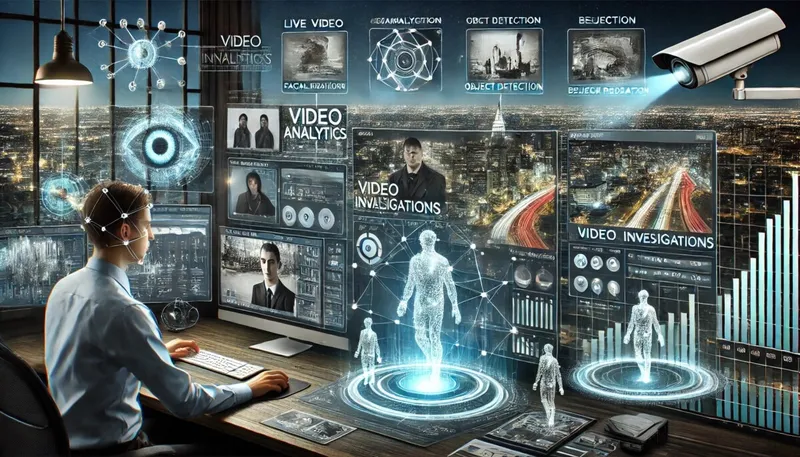
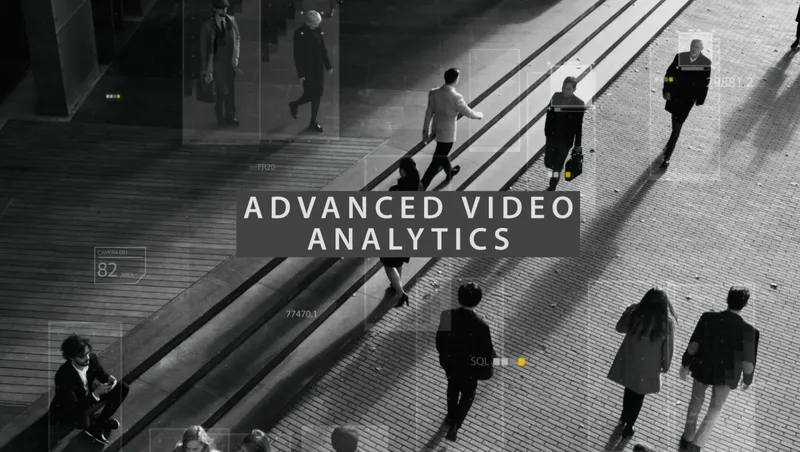
Video analytics refers to the automated process of extracting actionable information from video footage. These solutions leverage advanced algorithms to detect, classify, and highlight key events or objects, making it easier for investigators to find relevant evidence. Instead of sifting through hours of footage manually, law enforcement officers can use video analytics tools to focus on specific events, people, vehicles, or objects, saving time and resources.
How Does Video Analytics Work?
Video analytics solutions typically rely on two main approaches: machine vision and deep learning.
- Machine Vision focuses on identifying patterns or features within images or videos using pre-set rules and algorithms. For example, it might detect motion in a specific area or track the direction of moving objects.
- Deep Learning, on the other hand, uses neural networks specially trained on extensive datasets to recognise and classify objects, such as cars, buses, or people, with high precision. This approach improves the system’s adaptability to real-world scenarios, even on low-quality or noisy footage.
Machine Vision vs. Deep Learning
While machine vision is rule-based and deterministic, deep learning excels in recognising complex patterns and adapting to nuances in real-world data. However, deep learning models often function as “black boxes,” where the inner workings of the decision-making process remain unclear. Kinesense bridges this gap by combining the reliability of machine vision with the adaptability of deep learning, creating a transparent and efficient solution for law enforcement.
Kinesense’s Unique Approach to Video Analytics
Kinesense stands out in the market with its commitment to ethical and efficient video processing. Here’s what makes their approach different:
- Focus on Key Objects Without Facial Recognition: Unlike many solutions, Kinesense does not rely on facial recognition or automatic number plate recognition (ANPR) by default. This avoids the need to store personal data, reducing privacy concerns and legal complications.
- Specialised Algorithms for Law Enforcement: Kinesense has developed algorithms tailored to detect and classify objects like people and vehicles, allowing officers to quickly find suspects or vehicles of interest. These algorithms are trained on anonymised data sourced from real-world law enforcement scenarios, ensuring accuracy and relevance.
- Post-Event Analysis: Kinesense’s solutions are designed for post-incident investigations, enabling law enforcement to rapidly identify key events and extract critical evidence without the need for real-time monitoring.
- Ethical Data Usage: We train only on anonymised thumbnails of objects found in video footage, ensuring no personal or irrelevant data is retained. This minimises the risk of collateral intrusion and upholds data protection standards.
The Analytics Kinesense Develops
Kinesense provides a range of video analytics tools, including:
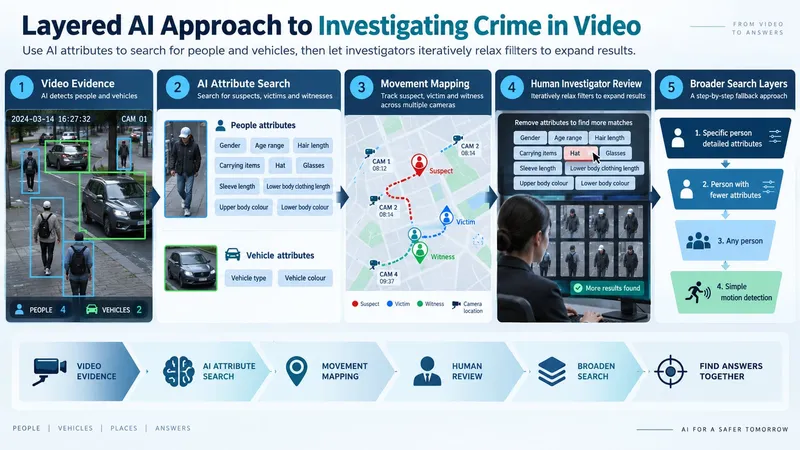
- Event Detection: Identifies moving objects and computes their attributes, such as colour and direction.
- Event Detection and Classification: Classifies motion events into categories like people, bicycles, cars, and buses.
- Attribute Recognition: Extracts detailed characteristics, such as clothing colour, vehicle type, and accessories.
- Licence Plate Detection: Tracks licence plates using YOLO-based object detection models, ideal for non-stationary cameras.
These tools are designed to operate on diverse video sources, including stationary surveillance cameras, bodycams, and dashcams, offering unmatched versatility for law enforcement.
How Are Video Analytics Used in Law Enforcement?
Video analytics is revolutionising how investigations are conducted. Here are some key applications:
- Rapid Evidence Gathering: By automatically detecting relevant objects or events, officers can quickly extract evidence from hours of footage, saving precious time during investigations.
- Targeted Searches: Features like attribute recognition allow officers to filter results based on specific criteria, such as finding all red cars in a scene or individuals wearing specific clothing.
- Ethical Investigations: By narrowing searches to relevant events, collateral intrusion is minimised, ensuring a more ethical use of surveillance footage.
Advantages of Kinesense’s Video Analytics for Law Enforcement
- Time Efficiency: Kinesense’s algorithms reduce the time spent on video review, allowing law enforcement to focus on solving cases.
- Privacy Compliance: By avoiding facial recognition and ANPR by default, Kinesense ensures compliance with data protection regulations.
- Customisability: Officers can tailor the system’s settings to their needs, such as adjusting sensitivity thresholds or loading custom classification models.
- Seamless Integration: Kinesense tools work across a variety of hardware setups, from standard CPUs to advanced GPUs, making them accessible for agencies of all sizes.
Conclusion
Video analytics is transforming the way law enforcement tackles investigations, providing faster, more accurate, and privacy-conscious tools to fight crime. Kinesense’s innovative approach, rooted in transparency, ethical practices and cutting-edge technology, makes it a trusted partner for law enforcement agencies worldwide. By focusing on what matters most and delivering actionable insights, Kinesense empowers officers to solve crimes faster and more effectively.