
Industry
10 reasons why you should be using video analytics to solve investigations
How video analytics helps police investigators: find key moments faster, cut collateral intrusion, search by appearance and save 75–95% of review time.
Updated
Video analytics helps investigators solve cases faster by finding the people, vehicles and events that matter in hours of CCTV, so they watch minutes instead of days. It also cuts missed events, reduces intrusion into the privacy of bystanders, and leaves a record of every step for court.
With thousands of hours of footage recorded every day, relying on manual methods to analyse video is no longer feasible. Video analytics, powered by Artificial Intelligence (AI) and advanced algorithms, automates time-intensive tasks and delivers precise insights. Kinesense has built video analytics for law enforcement for over 15 years, in tools such as Kinesense LE and Kinesense REVIEW.
Here are 10 reasons why adopting video analytics is a game-changer for investigations.
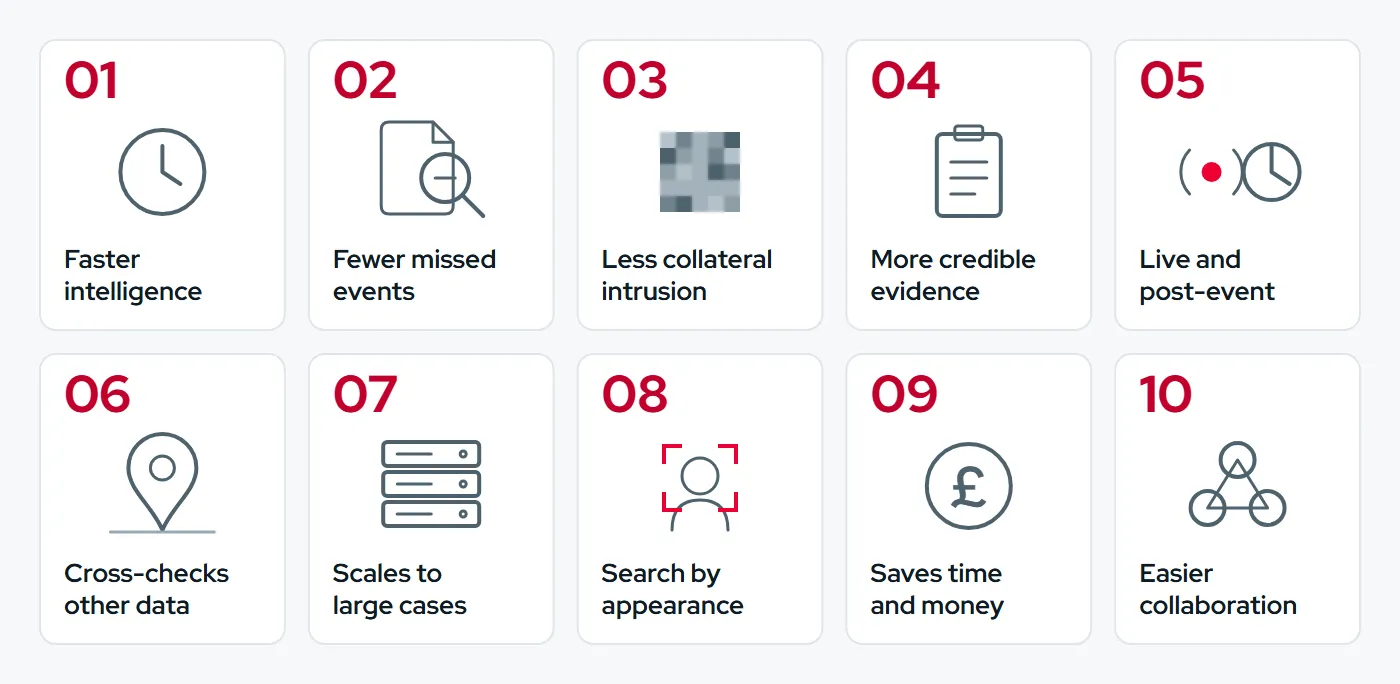
1. Get actionable intelligence faster
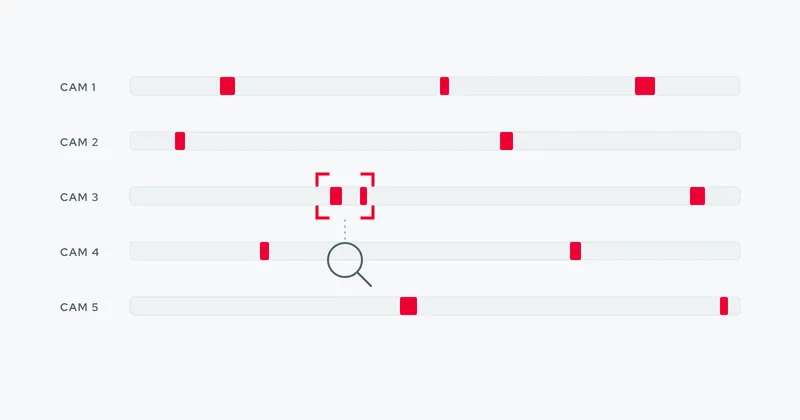
Reviewing hours of footage manually can be slow and delay investigations by days or even weeks. Video analytics streamlines this process by quickly identifying key moments, objects, and events, allowing investigators to rapidly identify and confirm victim, suspect and witness movements. Our guide to reviewing hours of CCTV footage quickly shows how this works step by step.
2. Reduce human error in video review
Fatigue, bias, and oversight are common in manual video reviews. Video analytics does not tire, ensuring critical details, such as subtle movements or rare events, aren’t missed. During trials of Kinesense solutions, common feedback from users is they found something they missed when manually reviewing the video.
3. Reduce collateral intrusion
‘Collateral intrusion’ means the risk of obtaining private information about people who are not subjects of surveillance. By narrowing searches to relevant events using video analytics, collateral intrusion is minimised, ensuring a more ethical use of surveillance footage. Where bystanders still appear in footage that is disclosed, they can be redacted from the video; see also what GDPR requires you to redact.
4. Make video evidence more credible in court
By combining video analytics into a complete video investigation platform, you can organise results into a format that’s easy to present. Features like event tagging, visual timelines, and annotations improve the credibility and clarity of evidence in court, and a disclosure report records every step taken. Read more on why the audit chain matters for video evidence.
Indeed, in 2017, at Manchester Crown Court, Judge Richard Mansell QC deemed that the use of Kinesense video analytics to analyse thousands of video files was an independent review, and it was instrumental to the trial for the murder of Sian Roberts.
5. Combine real-time alerts with post-event analysis
Video analytics certainly has its place in real-time analysis to highlight potential events for monitoring personnel, but its true beauty is that real-time analysis can be combined with post-event analysis. Video AI can be useful when you know what you are looking for, and when you don’t.
6. Cross-check video with other evidence
Video metadata like GPS and timestamps can be compared and cross-referenced with other intelligence data like cell phone data. At Kinesense, our solution allows users to plot key video movements on maps and then overlay GPS and timestamp data, helping investigators to confirm important details, and even identify new locations of interest.
7. Scale up for large, complex cases
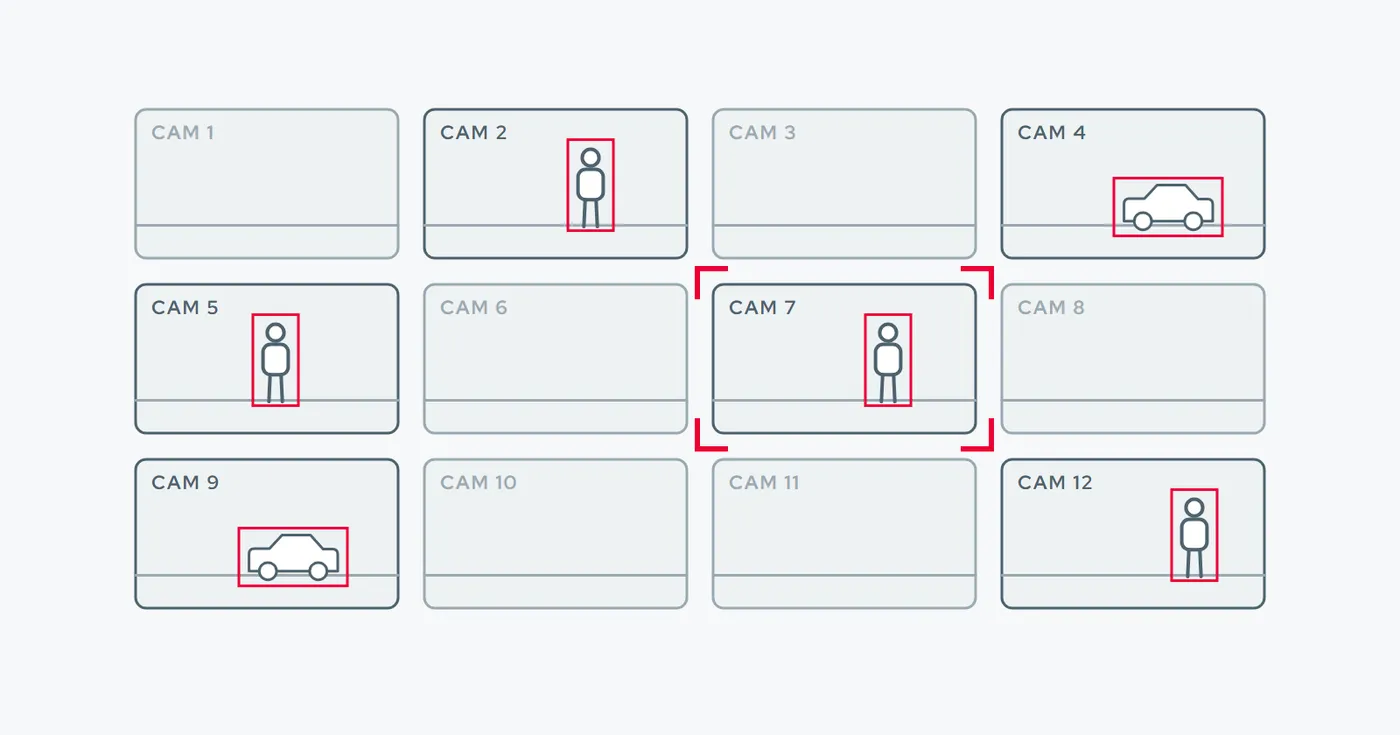
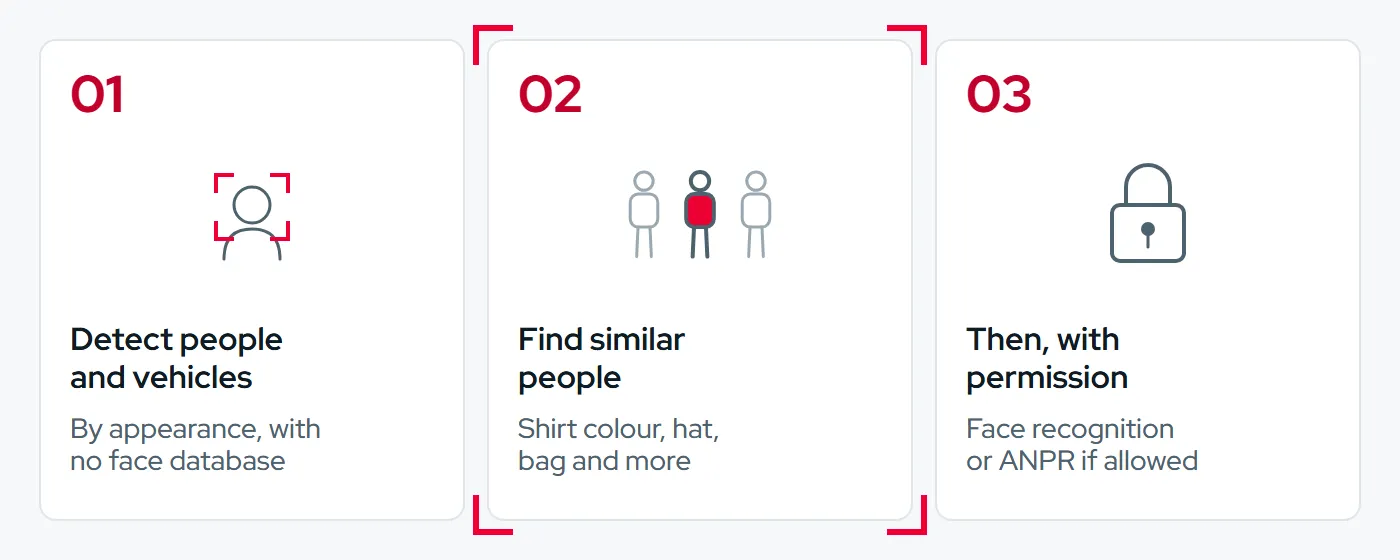
Large investigations often involve footage from multiple cameras and locations. Video analytics can process and analyse data across all these sources simultaneously, ensuring no detail is overlooked in complex cases. The Kinesense attribute recognition algorithms are perfect for large cases comprising many video sources. You can use it to find similar people based on their appearance like shirt colour, hat, bag etc.
8. Search by appearance, without face recognition
For some law enforcement agencies, data privacy concerns and regulations mean they cannot use technologies like face recognition and ANPR. This is why Kinesense also develops the option of analytics that focus on the detection of people and vehicles using appearance-based criteria. This can help you find similar people based on appearance without the need to analyse against a facial recognition database. When you have found your persons or vehicles of interest, and have the relevant permission, facial recognition and ANPR can then be used.
9. Save time, resources and costs
While there’s an initial investment in video analytics software, it quickly pays for itself by cutting down the manual labour and time required for investigations. This efficiency results in significant cost savings for law enforcement and private security teams.
In a recent case with another UK police force’s Major Investigation Team, 643 hours of CCTV video was obtained in relation to the crime. Of these 643 hours, using Kinesense LE to filter only areas of interest, the force needed to watch just 70 hours, resulting in a saving of 573 hours of actual viewing time. Based on this force’s costing of £20/hour for the individual reviewing the video, the force effectively saved over £11,000 on that one job alone.
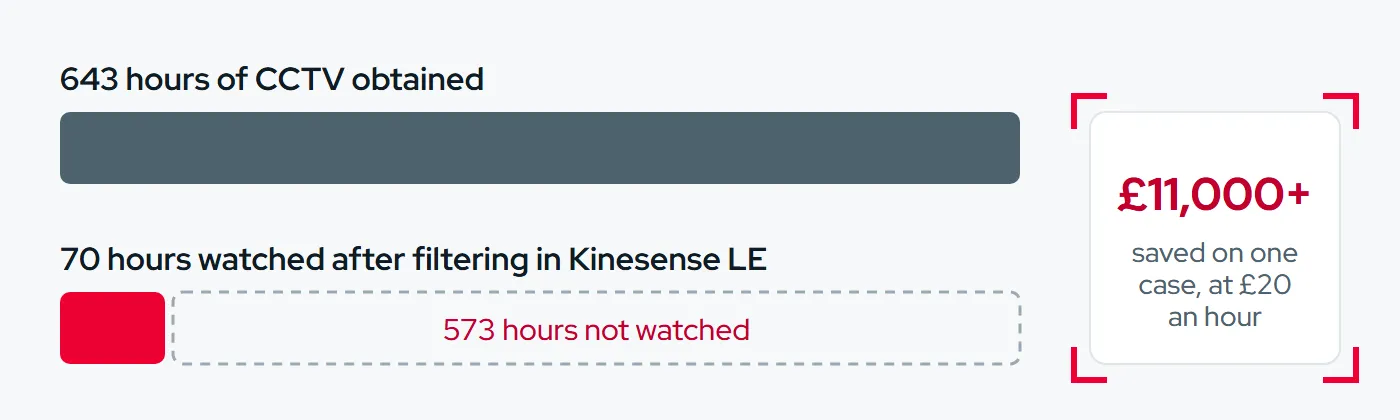
That case is a cut of 89%, in line with what we see across customers: Kinesense users typically save 75–95% of their time reviewing video. Importantly, this means that you can use your time elsewhere.
10. Collaborate more easily across teams
Video analytics tools often come with features for securely sharing footage and insights with team members or external agencies. This promotes seamless collaboration and ensures everyone works with the most relevant and up-to-date evidence.
Video analytics built for law enforcement
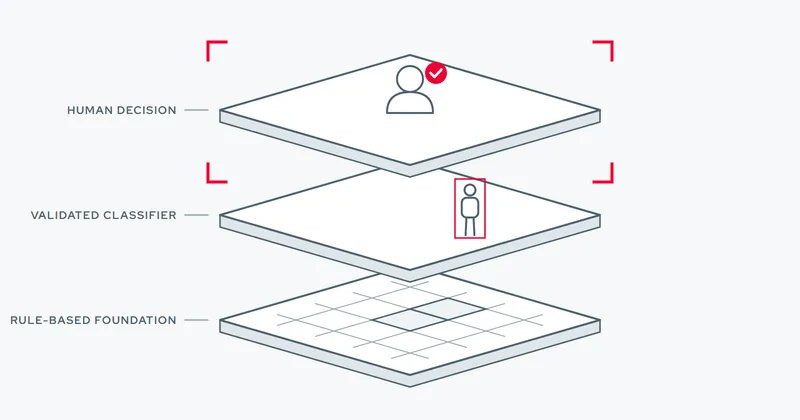
Artificial intelligence is a rapidly growing field and its benefits are plenty, but law enforcement has particular considerations to take into account, which is why evidential AI has to be layered. At Kinesense, we have been developing AI solutions for over 15 years with a unique focus on the needs of the law enforcement sector. Request a demo if you would like to explore how to make the best of this technology in your organisation.
Frequently asked questions
What is video analytics in a police investigation?
Video analytics is software that detects motion, people and vehicles in CCTV and other footage, so investigators can jump to the moments that contain something relevant instead of watching every hour. The investigator then checks each result by eye, and every action is recorded for disclosure.
Does video analytics replace manual CCTV review?
No. It filters the footage down to the events worth watching, and an investigator still verifies each one. It reduces the hours watched and the chance of missing something, but the judgement stays with the person reviewing.
Can video analytics be used without face recognition?
Yes. Appearance-based analytics detect people and vehicles and find similar ones by features such as shirt colour, a hat or a bag, with no face recognition database. Face recognition and ANPR can then be used later, where the force has the relevant permission.
How much review time does video analytics save?
Kinesense customers typically save 75–95% of their review time. In one Major Investigation Team case, filtering in Kinesense LE cut 643 hours of CCTV to 70 hours of viewing, a saving of 573 hours and over £11,000 at £20 an hour.